
Time is a silent killer in the world of collections. A patient receives a bill, sets it on the counter, and thinks, “I’ll get to it.” Weeks pass. A second notice arrives. Then a third. By the time a final notice lands, the patient may be frustrated, confused, or already juggling other financial commitments—and their likelihood of paying that bill has dropped significantly.
Accounts Receivable (AR) aging is divided into five categories: 0–30, 31–60, 61–90, 91–120, and 120+ days. On the patient side, this includes copays, deductibles, coinsurance, and self-pay balances. The longer these sit, the harder they are to collect—and the more pressure they put on a hospital’s bottom line. Aging AR might be the enemy, but it doesn’t have to have the last word. Simply put, you need a better statement cycle.
The Statement Cycle Is a Financial Tool—Treat It Like One
For most health systems, the billing statement is an afterthought—one of the final steps in an AR workflow that begins before the patient walks in the door. But timing, format, and frequency of patient statements play a direct role in determining when (and whether) balances get paid.
A statement isn’t just a reminder that money is owed. When executed well, it’s a communications vehicle and your team’s biggest superpower for resolving debt before it ages. At Revenue Enterprises, we’ve built our statement cycle around one core idea: the earlier you engage, the better the outcome—for the hospital and for the patient.
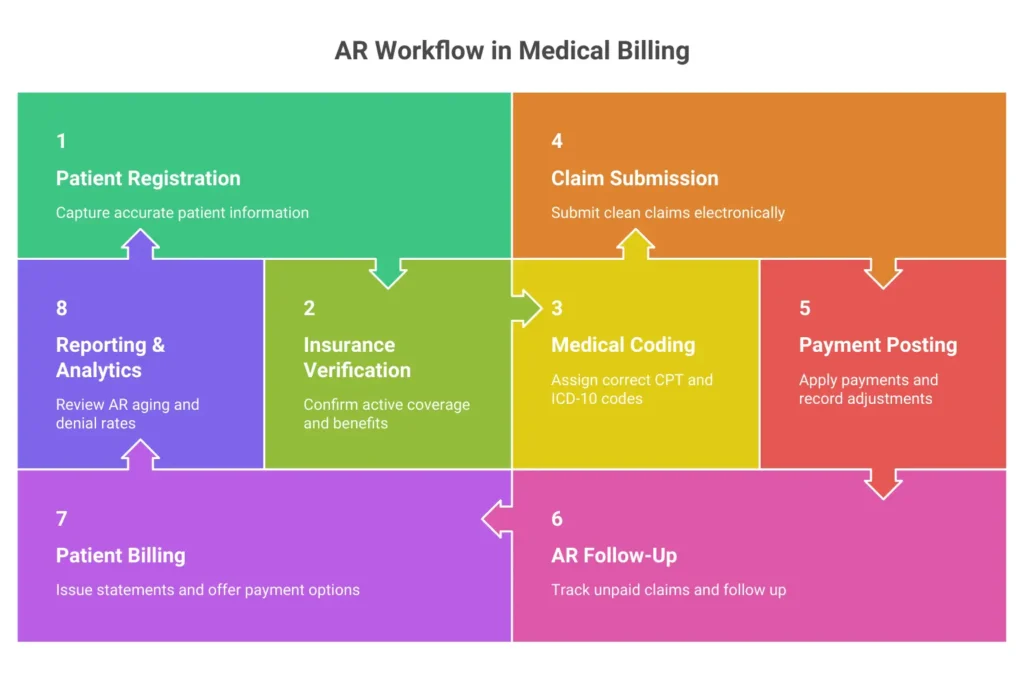
*Image Source: https://www.medibillrcm.com/blog/ar-in-medical-billing/
Why Early Outreach Changes Everything
Industry benchmarks for days in A/R typically range from 30–50 days, with many hospital systems trending toward the higher end due to complexity. High-performing organizations consistently maintain A/R below 40 days, while anything over 50 signals elevated risk—slower cash flow, increased write-offs, and potential revenue leakage.
This risk is compounded by timely filing requirements. Claims submitted after payer deadlines are typically unappealable, resulting in permanent revenue loss.
That’s why early engagement isn’t optional—it’s critical. Organizations that engage patients earlier in the financial journey consistently outperform those that wait, improving both collections and overall revenue cycle performance.
A few ways to shift the dynamic and build transparency with patients from the start:
- Be knowledgeable. Reps should be well-versed on what the patient owes and why.
- Collect upfront. Co-pays should be collected at the time of service, with that expectation set before the patient arrives through clear patient access communication scripting.
- Create options. Whether it’s a QR code, a text reminder, or a phone call—give patients multiple ways to accomplish the same goal.
Our Statement Cycle Is Designed for Cash Flow, Not Just Compliance
Revenue Enterprises enhances patient engagement through its partnership with RevSpring, leveraging advanced analytics and intelligent communication strategies to create a personalized, multi-channel experience. By aligning outreach with patient preferences and payment behavior, patients can receive statements via paper, text, email, or patient portal—through the channel where they’re most likely to engage. The result is a more convenient, responsive financial experience built around choice and accessibility.
It’s all about options.
The goal isn’t just to send a bill. It’s to create a frictionless path from statement to payment—the earlier, the better. When balances are addressed earlier in the cycle, days-to-pay shrink. Our partnership with an acute care health system in Northeastern Wyoming is proof: their day-to-pay rate dropped from 65 days to just 10 through a deliberate, proactive approach to patient financial engagement at every stage of the cycle.
The goal isn’t just to send a bill. It’s to create a frictionless path from statement to payment—the earlier, the better.
Confusion Costs Money—Don’t Let It
One of the most overlooked drivers of aging AR is billing confusion. 1 in 3 Americans report not feeling confident understanding the charges on their last medical bill—and 59% of patients in the same survey admitted to skipping or delaying care altogether due to uncertainty around cost.
Revenue Enterprises’ goal is to bring structure and clarity to an otherwise ambiguous process—from the language and format of the first statement to the timing of follow-up calls. Our customer service and recovery representatives are trained to advocate for patients who need assistance and find solutions that work long term.
The Right Partner Changes the Cycle
You don’t need a bigger team or tech stack to fix your aging AR. You just need to make your existing statement cycle work smarter, not harder. At Revenue Enterprises, we don’t wait for the final notice. It’s critical to start the conversation early, engage patients on their terms, and resolve balances before they become problems—protecting hospital margins and helping patients avoid the stress of debt that could have been resolved sooner.
Interested in how Revenue Enterprises can improve your statement cycle and accelerate cash flow? Reach out at Sales@RevenueEnterprises.com